
Picture a rookie sailor who has just learned to tie knots and read a compass, but has never actually taken a ship out of the harbor. That is where most people stand before they enrol in an agentic ai course armed with scattered knowledge of prompts and APIs, but without the instincts to steer a system that thinks, plans, and acts on its own. The gap between knowing the parts of a ship and commanding one at sea is exactly the gap this roadmap tries to close.
Rather than reciting textbook definitions of “autonomous agents” or “goal-directed reasoning,” it helps to imagine agentic AI as a ship’s captain rather than a passenger. A passenger like a traditional chatbot waits to be told where to go. A captain reads the weather, consults the charts, adjusts the sails, and corrects course when a storm rolls in, all without waiting for someone to issue every single instruction. A well-designed agentic ai course is essentially a training academy for captains: it teaches you to build systems that observe, decide, and act in loops, not just systems that answer one question and stop.
The Captain’s Instincts: Core Skills to Master
Before anyone commands a ship, they learn to read the sea. In agentic AI terms, this means understanding how large language models reason step by step, how memory lets an agent recall earlier decisions instead of starting fresh each time, and how planning modules break a big goal into smaller, executable tasks. Alongside this comes the discipline of prompt engineering not as a party trick, but as the equivalent of naval signaling, precise enough that the crew, meaning the underlying model, never misreads an order. Equally vital is learning to evaluate an agent’s decisions, spotting when it drifts off course due to hallucination or faulty logic, much like a captain checking the compass against the stars.
The Navigation Room: Tools of the Trade
Every captain relies on instruments, and every agent builder relies on frameworks. Orchestration libraries such as LangChain, CrewAI, and AutoGen act like a ship’s navigation room, coordinating multiple specialized crew members, or sub-agents, toward a shared destination. Vector databases serve as the ship’s logbook, storing memories of past voyages so the agent doesn’t repeat mistakes. APIs and function-calling mechanisms are the ropes and pulleys that let the agent actually manipulate its environment, whether that means booking a calendar slot, querying a database, or triggering a workflow in another application. Learning to wire these instruments together, rather than just knowing their names, is what separates a deckhand from a captain.
Reading the Weather: Where These Systems Prove Themselves
The real test of any captain is open water, not the harbour simulator. In customer support, autonomous systems now triage incoming tickets, pull relevant account history, and resolve routine issues without a human hovering over every step, freeing support teams for the genuinely hard problems. In software development, agentic systems increasingly write, test, and refine code across multiple files in a single session, catching their own errors before a human ever reviews the pull request. In logistics and supply chains, agents monitor shipment data continuously, reroute orders around delays, and renegotiate delivery windows with vendors decisions that once consumed hours of manual coordination now unfold in minutes. These are not hypothetical horizons; they are the waters agentic systems already sail.
Building Your Own Vessel: Projects That Anchor Learning
Knowledge without a voyage is just theory. Aspiring builders should construct a research agent that gathers, summarizes, and cross-checks information across multiple sources; a task-automation agent that manages emails or scheduling with minimal supervision; and a multi-agent system where specialized bots a planner, a researcher, a writer collaborate the way a bridge crew divides responsibilities. Each project should end with an honest post-mortem: where did the agent drift, and why? That habit of reflection is what a serious course on building autonomous systems should instill above all else.
Conclusion: From Harbor to Horizon
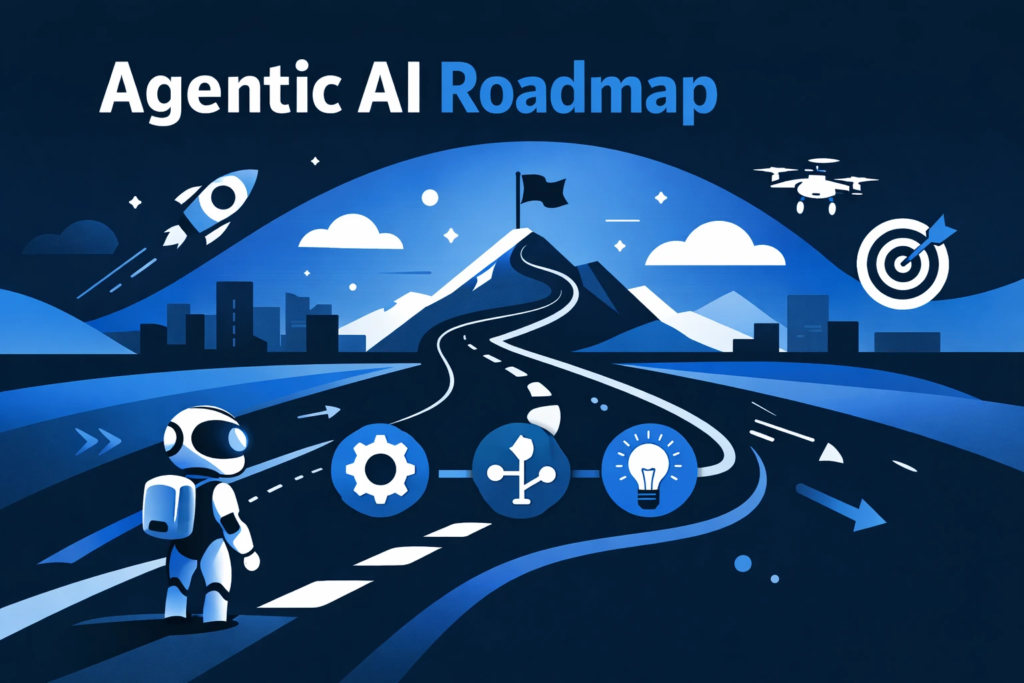
Learning agentic AI is less about memorizing terminology and more about learning the instincts of a captain reading conditions, adjusting plans, and taking responsibility for outcomes rather than waiting for instructions. The roadmap of skills, tools, and hands-on projects outlined here is not a checklist to rush through but a genuine apprenticeship. Complete it seriously, and you won’t just understand agentic AI you’ll be ready to command it.
Business Name: ExcelR – Data Analyst, Data Science & Generative AI Course in Noida
Address: Myworx, A-5, 2nd Floor, near Noida Sector 16 Metro Station, Gautam Budh Nagar, Block A, Noida Sector 3, Noida, Uttar Pradesh 201301
Phone Number: 09187195453
Email ID: enquiry@excelr.com