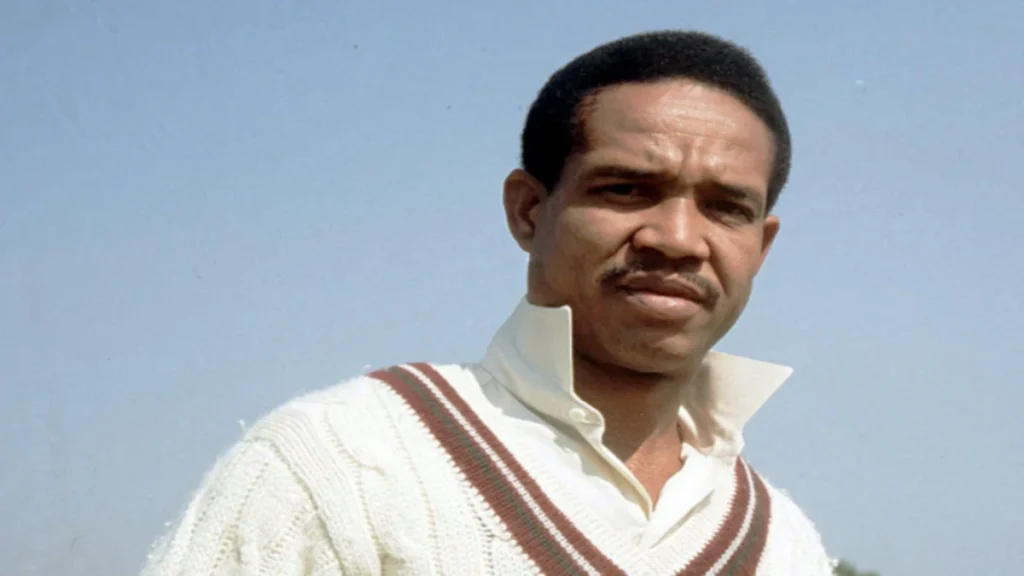

The late West Indies legend’s visit to Rhodesia in 1970 is one of the most controversial moments in cricket history, reflecting the complex relationship between sport and politics during a turbulent period in history.
The death of Sir Garfield Sobers has revived interest in one of his most controversial actions in his remarkable career his visit to Rhodesia in 1970, which caused a lot of controversy both in the cricketing world and beyond.
Despite his outstanding on-field performances, Sobers’ trip to Rhodesia, which was then ruled by a white minority, was a defining moment off the field, and was the subject of much political debate.
A visit during a tense political climate
Sobers went to Rhodesia in September 1970 when the country was embroiled in a bitter struggle between the white minority government and Black liberation movements.
While racial segregation in Rhodesia was not as pronounced as in neighbouring South Africa’s apartheid system, the divisions were still very strong, especially in elite sporting events like cricket.
Sobers’ involvement in a cricket event in Salisbury (now Harare) coincided with a period when many thought that there should be no international sporting contact with the regime.
Cricket overshadowed by controversy
Sobers played in a double-wicket tournament with South African captain Ali Bacher, captivating the audience with his talent and charm.
But the furore escalated when it was reported that Sobers had also seen the then Prime Minister of Rhodesia, Ian Smith, whose regime was universally condemned by the international community.
The meeting set off a lot of criticism in the Caribbean, with political leaders, cricket officials and fans all wondering why the West Indies captain had come to the country.
Backlash across the Caribbean
Sobers’ trip received a quick and harsh response.
The visit was condemned by several Caribbean leaders and some politicians even demanded his ouster as West Indies captain.
The dispute also posed a danger to the West Indies’ upcoming tour to India, as it was feared that his involvement might cause diplomatic issues.
Under pressure, Sobers later made a public apology, stating that he had not been aware of the political ramifications of the visit and that he had come to play cricket.
If he had been fully aware of the broader picture of the problems of Rhodesia, he would never have accepted the invitation,” he said.
Friendship beyond politics
Sobers’ political fallout did not end his friendship with some South African cricketers, notably Ali Bacher.
The duo maintained their friendship long after international cricket resumed after apartheid ended in South Africa.
Sobers was present at the celebrations when the sport of cricket united in 1991, representing a new era of inclusion and reconciliation in the sport.
A legacy greater than one controversy
The Rhodesia visit is one of the most controversial aspects of Garfield Sobers’ career, but it is just one of his many remarkable achievements.
His all-round brilliance revolutionized the game of cricket, and he continues to inspire players everywhere.
Today, over 50 years later, Sobers remains a figure to be remembered not just for the difficult moment but, most importantly, for his unparalleled brilliance, sportsmanship, and impact on the sport.