
When a strong thunderstorm rolls across the Twin Cities, it can leave hundreds of small dents across the hood, roof and trunk of a car in a matter of minutes. For many drivers, hail damage repair in Minneapolis MN becomes an urgent question after the very first storm of the season. Minnesota sits in one of the most hail-prone regions of the United States, and the metro area sees damaging hail events almost every spring and summer.
This guide walks through everything a vehicle owner needs to know after a hailstorm: how to assess the damage, which repair methods work best, how insurance claims work in Minnesota, and how to choose a trustworthy repair shop in the Minneapolis area.
Why Minneapolis Sees So Much Hail Damage
Hail forms inside powerful thunderstorms when strong updrafts carry raindrops high into freezing layers of the atmosphere. The National Weather Service notes that hailstones grow larger each time they cycle through the storm cloud, and stones larger than one inch in diameter can dent sheet metal with ease. Minnesota experiences the classic setup for these storms: warm moist air from the south colliding with cooler air masses, especially from April through September.
For drivers in the metro area, that means hail damage is not a rare event. It is a recurring seasonal risk, and vehicles parked outdoors during storm season face repeated exposure. Understanding the repair options before a storm hits saves time and stress when damage does occur.
Common Types of Hail Damage on Vehicles
Not all hail damage looks the same. Repair technicians in Minneapolis typically encounter several distinct patterns after a storm passes through.
Minor Surface Dents
Small hailstones create shallow dents across horizontal panels such as the hood, roof and trunk lid. The paint usually remains intact, which makes these dents ideal candidates for paintless repair methods.
Deep Impact Dents
Larger stones leave deeper impressions that stretch the metal and sometimes crack the paint. These dents often appear on multiple panels at once and may require a combination of repair techniques.
Paint and Trim Damage
When hail strikes with enough force, it can chip or crack the paint surface. Exposed metal is vulnerable to moisture, which can lead to rust if left untreated. Severe storms can also crack mirrors, damage moldings and break headlight covers.
Hail Damage Repair Methods Compared
The two main approaches to hail damage repair differ in cost, speed and the condition of the vehicle they suit best.
| Factor | Paintless Dent Repair | Traditional Body Repair |
| Best for | Shallow dents with intact paint | Cracked paint or stretched metal |
| Paint work needed | None | Filling, sanding and repainting |
| Typical turnaround | Faster, often a few days | Longer, depending on panel count |
| Factory finish | Preserved | Repainted panels |
Paintless Dent Repair
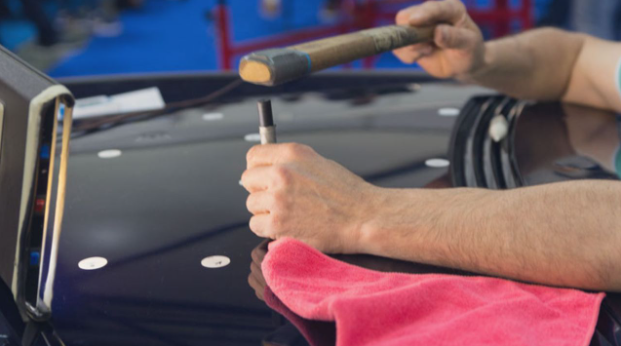
Paintless dent repair, often shortened to PDR, is the preferred method for most hail damage in Minneapolis. Skilled technicians use specialized tools to massage dents out from behind the panel, restoring the original shape without touching the factory paint. Because no repainting is involved, PDR is generally faster, less expensive and better for the long-term value of the vehicle.
Traditional Body Repair
When the paint is cracked or the metal is badly stretched, traditional body work becomes necessary. This process involves filling, sanding, priming and repainting the damaged panels, and in severe cases replacing panels entirely. A quality shop will match the paint color precisely so the repair blends invisibly with the rest of the vehicle.
How Insurance Claims Work for Hail Damage in Minnesota
Hail damage falls under the comprehensive portion of an auto insurance policy, not collision coverage. After a storm, the claim process usually follows a clear sequence: document the damage with photos, contact the insurance provider, schedule an inspection with an adjuster, obtain a written repair estimate, and then authorize the repair shop to begin work.
Most repair facilities in the Minneapolis area work directly with insurance companies and can help coordinate the paperwork. Vehicle owners should review the deductible on the comprehensive policy before filing, since the deductible amount is subtracted from the claim payout. Filing promptly matters, because insurers expect claims to be reported within a reasonable time after the storm.
Choosing a Hail Damage Repair Shop in Minneapolis
After a major hailstorm, repair shops across the metro area fill up quickly, and out-of-town operators sometimes appear offering quick deals. A careful choice protects both the vehicle and the wallet.
- Look for technicians with specific experience in hail restoration, not just general body work.
- Ask whether the shop provides a written warranty on the repair work.
- Check recent customer reviews from local drivers rather than relying on advertising alone.
- Confirm the shop helps with insurance documentation and adjuster visits.
- Get a detailed written estimate before authorizing any work.
Preventing Hail Damage Before the Next Storm
No driver can stop a hailstorm, but simple habits reduce the risk. Parking in a garage or covered structure during storm season is the single most effective step. Hail protection car covers add a layer of defense for vehicles that must stay outdoors. Monitoring weather alerts through a phone app or local news station gives drivers time to move a car under cover before a storm arrives.
Conclusion
Hail damage repair in Minneapolis MN is a routine part of vehicle ownership in a region where severe summer storms are a fact of life. The key lessons are simple: inspect the vehicle promptly after every storm, choose paintless dent repair whenever the paint is intact, understand the comprehensive coverage on the insurance policy, and select a local shop with proven hail experience. Acting quickly protects the appearance, value and structural health of the vehicle for years to come.
How long does hail damage repair usually take?
Most paintless dent repair jobs are completed within a few days. Extensive damage involving many panels or traditional repainting can take longer, depending on the schedule of the shop.
Does car insurance cover hail damage in Minnesota?
Yes, hail damage is covered under the comprehensive portion of an auto insurance policy. The policy deductible applies, so review the deductible amount before filing a claim.
What is paintless dent repair?
Paintless dent repair is a technique in which technicians massage dents out from behind the panel without repainting. It preserves the factory finish and is the preferred method for shallow hail dents with intact paint.
Can small hail dents cause problems if left unrepaired?
Yes. Even small dents can lead to paint deterioration and rust over time, and visible damage lowers the resale value of the vehicle. Prompt repair prevents these long-term issues.
Should I repair hail damage if it is only cosmetic?
Cosmetic damage does not affect how the car drives, but repairing it protects the resale value, prevents corrosion and keeps the vehicle in good overall condition.
How can I protect my car from future hailstorms in Minneapolis?
Park in a garage or covered structure during storm season, use a hail protection car cover when parking outdoors, and monitor weather alerts so the vehicle can be moved under cover before a storm arrives.