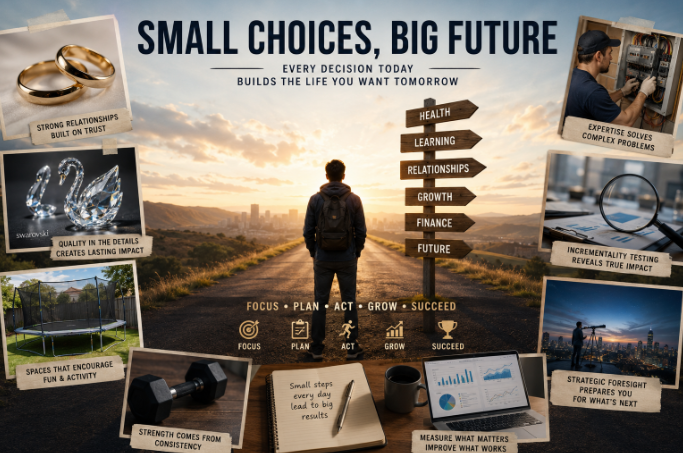

We often imagine success as the result of one groundbreaking decision or a single life-changing opportunity. In reality, long-term achievements are usually built upon hundreds of small choices that seem insignificant at the time. Whether someone is improving a business, strengthening relationships, maintaining health, or learning new skills, consistent actions create lasting outcomes.
Modern life encourages people to focus on immediate rewards. Notifications, short-form content, and instant feedback make it easy to overlook the importance of patience. Yet the individuals and organizations that consistently perform well share one common characteristic: they think beyond today. They evaluate present decisions based on future impact rather than temporary convenience.
Interestingly, this principle applies across almost every area of life. Personal relationships require continuous effort instead of occasional grand gestures. Professional growth depends on regular learning rather than waiting for promotions. Financial security develops from disciplined habits instead of sudden windfalls.
Understanding these patterns helps us make smarter decisions. When we recognize that everyday choices accumulate into meaningful results, we become more intentional about how we spend our time, energy, and resources. The following perspectives illustrate how seemingly unrelated areas of life can teach valuable lessons about sustainable success.
The Value of Choosing Quality Over Convenience
People frequently face situations where investing in quality provides better long-term value than selecting the cheapest available option. This lesson appears in everything from home improvements to personal purchases.
For example, selecting durable wedding rings represents more than buying jewelry. It reflects a mindset of choosing lasting value over temporary savings. Well-crafted items often require a higher initial investment but reduce replacement costs while carrying emotional significance for years.
The same philosophy applies to education, software, tools, and professional development. Resources built with quality standards usually produce better outcomes while requiring fewer corrections later.
Small Details Create Memorable Experiences
Many successful brands understand that customers remember details just as much as major features. Presentation, craftsmanship, and thoughtful design influence how people perceive quality.
A recognizable example is swarovski, whose reputation has been built on precision, consistency, and elegant craftsmanship. Beyond decorative products, the brand demonstrates how attention to detail creates trust and emotional connection with customers.
Businesses of every size can adopt this principle by refining customer adwords management services, improving communication, and ensuring consistency throughout every interaction.
Designing Better Spaces for Active Living
As more families prioritize healthier lifestyles, outdoor recreation has become increasingly important. Well-designed recreational spaces encourage movement while strengthening social connections.
A rectangle trampoline is often chosen because its shape provides more usable jumping space and fits efficiently into many backyard layouts. Beyond entertainment, it encourages physical activity while promoting coordination and balance for users of different ages.
This example highlights an important concept: environments influence behavior. When healthy activities are easily accessible, people naturally participate more often.
Movement Is an Investment Rather Than an Expense
Regular exercise remains one of the highest-return investments individuals can make. Better physical health contributes to stronger mental performance, increased productivity, improved sleep, and greater resilience.
A simple trampoline workout offers cardiovascular benefits while placing relatively low impact on joints compared with some traditional forms of exercise. Because enjoyable activities are easier to maintain consistently, selecting fitness routines that people genuinely enjoy increases the likelihood of long-term success.
The best exercise program is ultimately the one that becomes part of everyday life.
Strength Comes From Consistency
Fitness experts frequently emphasize that progress depends more on consistency than intensity. Sustainable routines outperform occasional bursts of motivation.
Training with hantlar allows individuals to build strength progressively while improving balance and muscular endurance. Incremental improvements may appear modest from one week to the next, yet they compound significantly over months and years.
The same principle applies beyond fitness. Learning languages, developing professional expertise, and building businesses all reward consistent effort more than short periods of extreme productivity.
Specialized Expertise Solves Complex Problems
Modern homes and workplaces rely on increasingly sophisticated electrical systems. While many maintenance tasks can be completed independently, specialized work requires trained professionals.
When residents require reliable electrical installations or repairs, searching for a qualified sähkömies espoo ensures that projects meet safety standards while reducing long-term risks. Professional expertise often prevents costly mistakes that inexperienced attempts may create.
This reinforces an important lesson: knowing when to seek expert guidance can be just as valuable as developing personal skills.
Measuring What Actually Works
Organizations today collect enormous quantities of data. However, having information does not automatically produce better decisions. Leaders must distinguish correlation from causation.
This is where incrementality testing becomes particularly valuable. Instead of assuming marketing campaigns or operational changes generated positive outcomes, businesses can isolate their true impact through controlled experiments.
Accurate measurement prevents wasted investments while allowing organizations to allocate resources toward strategies that genuinely produce measurable results. Data-driven decision-making ultimately creates greater confidence and more efficient growth.
Looking Beyond Immediate Trends
Many organizations excel during stable conditions but struggle when markets change rapidly. The difference often lies in preparation rather than reaction.
Leaders who embrace Strategic Foresight examine emerging technologies, demographic changes, environmental factors, and economic shifts before they become mainstream concerns. Rather than predicting a single future, they prepare for multiple possible scenarios.
This proactive mindset encourages flexibility and resilience. Businesses become capable of adapting because they have already explored potential opportunities and challenges before they arrive.
Connecting Lessons Across Different Fields
At first glance, topics like relationships, design, recreation, fitness, skilled trades, analytics, and business strategy appear unrelated. Yet they all reinforce remarkably similar principles.
Quality creates durability.
Consistency produces improvement.
Thoughtful planning reduces uncertainty.
Expert knowledge minimizes unnecessary risk.
Measurement guides better decisions.
Future-oriented thinking increases resilience.
Recognizing these shared patterns allows individuals to transfer knowledge from one area into another. Someone who develops discipline in exercise often applies similar habits to career development. A company that improves customer experience may also improve internal communication by focusing on consistency and attention to detail.
Cross-disciplinary thinking encourages innovation because solutions often emerge when ideas from one field are adapted to another.
Practical Ways to Apply Long-Term Thinking
Developing a future-focused mindset does not require dramatic lifestyle changes. Small adjustments often produce meaningful improvements over time.
Start by asking whether today’s decisions will still seem beneficial one year from now. Prioritize learning over temporary entertainment whenever possible. Build systems instead of relying entirely on motivation. Evaluate results objectively rather than assuming success. Seek expert advice when specialized knowledge is required.
Another effective strategy involves reviewing progress regularly. Reflection transforms experience into learning by identifying what worked, what failed, and what deserves additional attention.
Most importantly, remember that meaningful progress rarely happens overnight. Patience allows compound improvements to emerge naturally.
Why Adaptability Matters More Than Perfection
Many people delay action while waiting for ideal circumstances. Unfortunately, perfect conditions rarely exist. Successful individuals understand that continuous adaptation is more valuable than flawless planning.
Markets evolve. Technology advances. Customer expectations change. Personal priorities shift throughout life.
Rather than resisting change, resilient individuals treat uncertainty as an opportunity for growth. They remain curious, continue learning, and adjust strategies based on new information.
This flexible mindset encourages confidence because it replaces fear of change with preparedness for change.
Building a Foundation That Lasts
Long-term success is rarely accidental. It grows from intentional decisions repeated consistently over extended periods. Whether improving personal wellbeing, strengthening relationships, advancing professionally, or leading an organization, sustainable progress depends upon quality choices, disciplined habits, careful measurement, and continuous learning.
Every small decision contributes to a larger story. By approaching daily actions with patience, curiosity, and purpose, anyone can build a stronger foundation for future achievements. The greatest advantages often belong not to those who move the fastest, but to those who consistently make thoughtful decisions that continue delivering value long after the moment has passed.