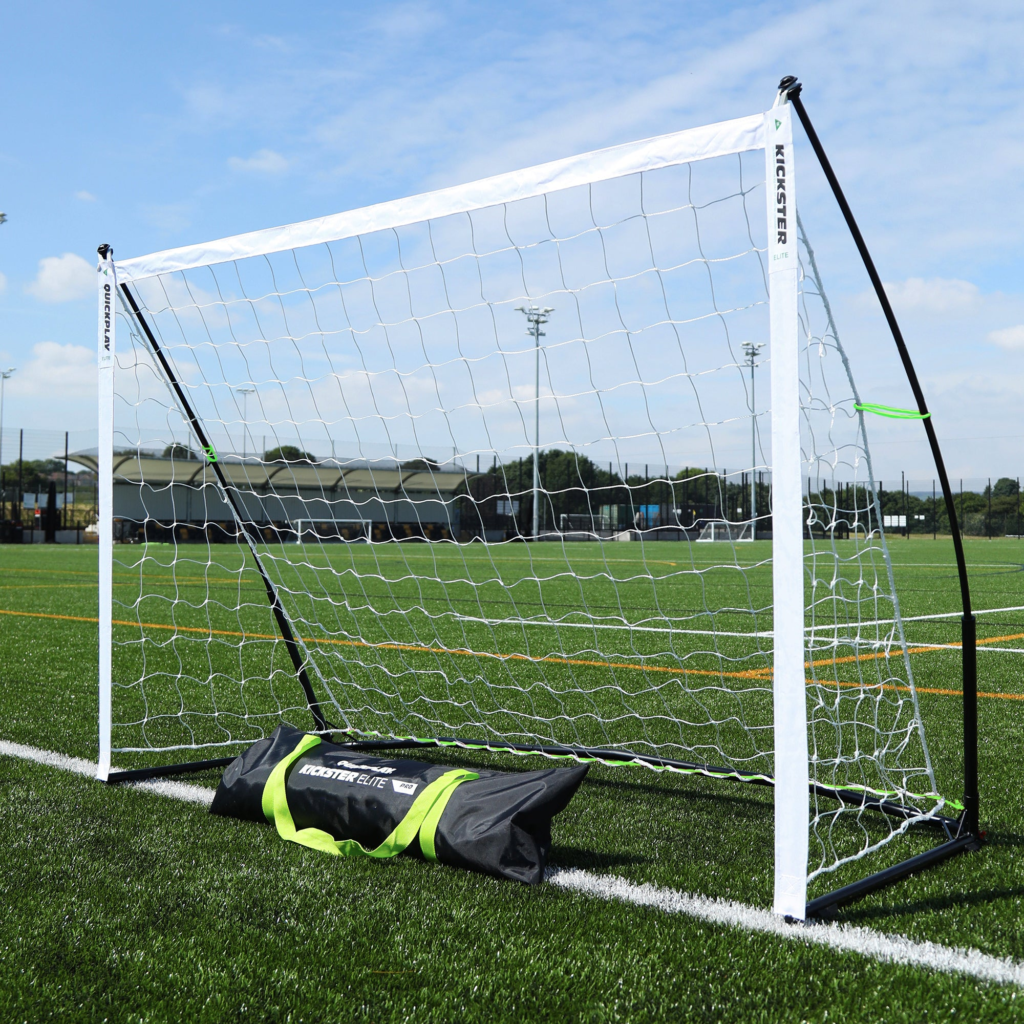
A quality football goal is one of those purchases that transforms how a player trains. The difference between kicking at an imaginary target and striking a ball into an actual goal frame is enormous — both technically and psychologically. Players develop better finishing habits, sharper decision-making in front of goal, and a genuine sense of progress when training against a real target.
But with so many options on the market — different sizes, frame types, materials, and price points — choosing the right portable football goal can feel overwhelming. This guide breaks down everything an Australian player, parent, or coach needs to know, from backyard garden goals for young kids right through to full-size portable aluminium frames for competitive club use.
Whether you’re just getting started or kitting out a training facility, brands like QuickPlay Sport have purpose-built goal ranges designed to match every level of the game — and every size of Australian backyard.
Why a Portable Football Goal Changes Everything
There’s a reason professional academies invest heavily in goal training infrastructure. Repetitive shooting practice against a fixed target is one of the most effective ways to develop finishing accuracy, composure in front of goal, and the confidence to take on difficult shots in match situations.
For most Australian players, however, training access is limited to twice-weekly club sessions. A portable goal at home eliminates that constraint entirely. In a single 30-minute backyard session, a player can take 50 to 100 shots — a volume that might take months to accumulate in organised training alone.
Beyond shooting, a portable goal enables a huge variety of drills: crossing and finishing combinations, goalkeeper distribution practice, small-sided games with siblings or friends, and set piece rehearsal. It’s one of the most versatile pieces of training equipment a footballer can own.
Understanding the Different Types of Portable Football Goals
Not all portable football goals are the same. Understanding the key categories helps you match the right product to your specific needs.
1. Garden & Backyard Goals
Designed primarily for younger players and casual backyard use, garden goals are lightweight, quick to assemble, and compact enough to store in a garage or shed. They typically feature a pop-up or simple push-together frame with a polyester net.
These goals are ideal for players aged 5 to 12 and for families who want an affordable, low-fuss option that can be set up and packed away in minutes. They’re not built for the power of teenage or adult strikes, but for their intended purpose — introducing children to the fundamentals of shooting and goalkeeping — they’re excellent.
2. Portable Training Goals
A step up in size and build quality, portable training goals are designed for regular solo practice and small group sessions. They feature a more robust frame — typically fibreglass or lightweight steel — with ground anchors or peg systems to hold the goal steady during powerful strikes.
These goals are popular with players aged 10 and above and suit backyards, parks, and school ovals. They’re portable enough to transport easily but sturdy enough to handle consistent hard use. Many models in this category are available in multiple sizes to match age-appropriate pitch dimensions.
3. Folding Rigid Frame Goals
Folding rigid frame goals combine the portability of a collapsible design with the solidity of a proper match-quality frame. These goals fold flat for storage and transport but lock into a rigid, stable structure when deployed. The net hangs with professional geometry, giving the frame the look and feel of a permanent installation.
This category is ideal for development players, training academies, and clubs that need quality goals that can be moved between venues or stored at the end of each session. They typically come in a range of sizes from 6×4 feet up to 12×6 feet and beyond.
4. Aluminium Goals
At the premium end of the portable goal market sit aluminium-framed goals. These are built to match or closely replicate official competition specifications, with heavy-duty aluminium tubing, professional net attachment systems, and anchoring solutions designed for club and academy environments.
Aluminium goals are best suited to clubs, schools, and serious players who want training conditions that mirror match-day reality as closely as possible. They’re the most durable category, capable of withstanding years of daily use without degrading.
5. 2-in-1 Goals & Rebounders
For players who want maximum training value from a single piece of equipment, 2-in-1 combination goals and rebounders are an outstanding option. These units function as a standard shooting target when the net is down, and as a rebounder board when the net is raised or replaced with a rebound surface — giving players two completely different training tools in one compact package.
Key Factors to Consider When Choosing a Portable Football Goal
Once you understand the goal types available, matching the right unit to your situation comes down to five key factors:
Player Age & Skill Level
Goal size should align with the age and development stage of the player. Using an undersized goal limits the realism of training, while an oversized goal can create poor habits for younger players who develop inaccurate technique to score at the far posts. As a general guide:
- Ages 5–8: 4×3 feet or similar compact garden goal sizes
- Ages 9–12: 6×4 feet — matches MiniRoos and development league dimensions
- Ages 13–16: 8×5 feet or 10×6 feet — appropriate for youth competition formats
- Ages 17+: 12×6 feet or full size — matches senior amateur and semi-professional competition
Available Space
Measure your available training space before purchasing. A 12×6 foot goal needs at least 15–20 metres of runup space behind the shooter for meaningful shooting practice. Smaller backyards are better served by 6×4 or 8×5 foot goals, which can be used effectively in tighter spaces and still deliver excellent training value.
Frequency of Use
A child who will use a goal occasionally at weekends has very different requirements from a serious player training five days a week. For high-frequency use, prioritise frame durability and net quality over price. A cheap goal that degrades within a season is poor value compared to a mid-range model that lasts five or more years.
Portability Requirements
If the goal needs to be transported regularly — to parks, training venues, or different locations — pay close attention to packed dimensions, weight, and whether a carry bag is included. Folding goals that pack down to a flat profile and weigh under 15kg are significantly easier to handle than bulkier alternatives.
Surface & Anchoring
Consider the surface you’ll be training on most frequently. Grass surfaces pair well with ground pegs and anchor stakes, which are standard on most portable goals. Hard surfaces like concrete or artificial turf require sandbag anchoring or weighted base options. Check that the goal you’re considering includes the right anchoring solution for your surface.
QuickPlay Sport’s Football Goal Range: Built for Every Level
When it comes to sourcing portable football goals in Australia, QuickPlay Sport has built one of the most comprehensive and well-regarded ranges available. Designed with the Australian climate and playing culture in mind, their goal lineup covers every level from beginner to advanced club player.
Explore the full range of football goals at QuickPlay Sport, and you’ll find purpose-built options across several distinct product lines:
KICKSTER Range — Portable & Pop-Up Goals
The KICKSTER range is QuickPlay Sport’s go-to solution for players who need a goal that’s fast to set up and easy to transport. Featuring a flexible, robust frame that deploys in seconds and stores flat, KICKSTER goals are perfect for park sessions, backyard training, and family use. Available in multiple sizes to suit junior through to adult players, the KICKSTER lineup balances affordability with genuine training quality.
Q-FOLD Range — Folding Rigid Frame Goals
The Q-FOLD range delivers a significant step up in structure and match-day realism. These goals fold down flat for effortless storage and transport but lock into a rigid, stable frame during use — giving players the feel of a permanent goal without needing one. The Q-FOLD MATCH 12×6 foot model in particular is a standout choice for serious teenage and adult players who want full-size training conditions at home or at the park.
Pro Alu Range — Professional Aluminium Goals
For clubs, schools, and advanced players who demand the highest standard, the Pro Alu range offers heavy-duty aluminium construction with professional-grade net systems and anchoring. These goals are built to last through years of intensive daily use and provide training conditions that are as close to official match specifications as a portable goal can deliver.
Garden Goal Range
For younger players just beginning their football journey, QuickPlay Sport’s garden goals offer safe, durable, and age-appropriate sizes that fit neatly into standard Australian backyards. Lightweight, easy to assemble, and designed to withstand the enthusiasm of young players, these goals are an excellent starting point for any football-loving family.
2-in-1 Goal & Rebounder Combos
For players who want both a shooting target and a rebound training tool, the 2-in-1 combination products in QuickPlay Sport’s range offer exceptional value. These units shift between goal and rebounder modes, effectively doubling the training variety available from a single equipment investment.
All QuickPlay Sport goals ship Australia-wide with fast tracked delivery and are backed by a 1-year warranty — making them a confident purchase for families and clubs alike.
Matching the Right Goal to Your Level: A Quick Reference Guide
Still unsure which type of goal is right for your situation? Use this quick reference to narrow your choice:
- Backyard fun for young children (5–10 years): Garden goal or KICKSTER pop-up — fast setup, compact, child-appropriate size.
- Development player training at home (10–15 years): KICKSTER portable or Q-FOLD rigid frame in 8×5 or 10×6 — durable enough for regular hard use, right size for development formats.
- Serious teenage or adult solo training (16+ years): Q-FOLD MATCH 12×6 or similar full-size folding goal — proper training dimensions, rigid frame, easy to transport.
- Club or academy training environment: Pro Alu aluminium goals — professional quality, maximum durability, suitable for daily multi-player use.
- Player wanting maximum training versatility: 2-in-1 Goal & Rebounder combo — shooting practice and rebound training from one piece of equipment.
Setting Up Your Portable Goal for Maximum Training Value
Getting the most from a portable football goal is about more than just assembling it and shooting. Here are a few practical tips to optimise your training setup:
- Position the goal with the sun behind the shooter where possible — training into bright sunlight limits visibility and creates unrealistic practice conditions.
- Use ground pegs or sandbags every session. Even on calm days, a ball struck at power can shift an unanchored goal. Secured goals also stay correctly shaped, preserving net geometry.
- Mark shooting zones at different distances and angles using cones or tape. Structured shooting from varied positions trains composure and technique more effectively than repetitive central shots.
- If training with a goalkeeper, communicate clearly before sessions about what drills are planned — this protects both players and maximises the value of time together.
- Inspect your goal’s frame and net periodically. Catching minor issues early extends the life of the equipment significantly.
Investment That Pays Dividends on Match Day
A portable football goal is far more than a training accessory — it’s a development tool that compounds over time. Players who train regularly with a real goal develop measurably better finishing accuracy, stronger shot mechanics, and the composure in front of goal that only comes from thousands of repetitions against an actual target.
In Australia’s football landscape, where access to quality facilities is unevenly distributed, a portable goal in the backyard or local park levels the playing field. It gives serious players the ability to train at match intensity, on their own schedule, without waiting for the next club session.
The key is matching the right goal to the right level — something that becomes straightforward once you understand the categories, the key buying factors, and what’s available in the Australian market.
Final Thoughts
From first kicks in the backyard to structured training sessions ahead of competitive matches, the right portable football goal makes every session more productive and more enjoyable. Size, frame type, durability, and portability all matter — and getting those factors right for your level ensures the goal you buy will serve you season after season.
Explore the complete range of football goals at QuickPlay Sport — Australia’s trusted source for portable goals built to suit every player, every backyard, and every level of the game.