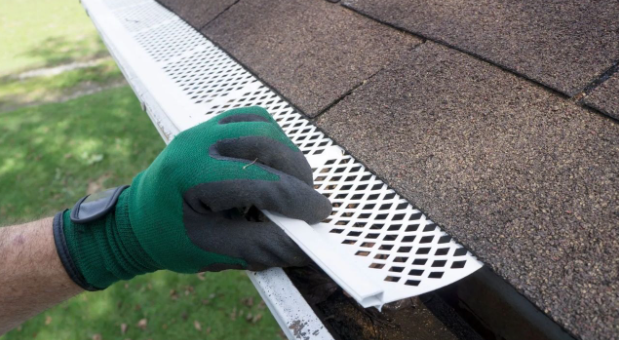
Denver Gutter Guards: Are Professional Gutter Guards Worth It? (2026 Guide)
Gutters do quiet but critical work. They carry rainwater away from the roof, walls, foundation and landscaping, and when they clog, the damage shows up as stained siding, flooded basements and rotting fascia boards. In a city with heavy spring storms and leaf shedding trees, keeping gutters clear becomes a recurring chore. Professional denver gutter guards reduce that burden by blocking leaves, pine needles and debris while letting rainwater flow through. This guide explains how gutter guards work, what professional installation adds, which guard types suit different homes, and whether the investment makes sense.
How Denver Gutter Guards Protect a Home
The core job of denver gutter guards is simple: keep debris out of the gutter channel while allowing water in. Leaves, twigs, shingle grit and seed pods wash off the roof and would otherwise settle inside the gutter, forming dense mats that block water flow. During a heavy downpour, a blocked gutter overflows, and that overflow lands exactly where it causes harm, next to the foundation or behind the siding.
A well matched guard creates a barrier across the top of the gutter. Larger debris stays on top of the guard, where wind or a quick brush clears it, while rainwater passes through into the channel. Guards do not make gutters maintenance free, but they turn a job that might need doing four times a year into one that needs a light check once or twice. For homes near mature trees, the difference is dramatic. Regular gutter cleaning in areas with heavy rainfall remains important, and guards make each cleaning faster and less frequent.
Why Professional Installation Matters
Choosing the guard is only half the task. Gutters vary in width, pitch, material and condition, and a guard that fits perfectly on one house may perform poorly on the next. Professional installers inspect the existing system first, checking for sagging sections, loose fasteners, incorrect slope and damaged downspouts. Fixing these issues before the guard goes on is essential, because a guard cannot correct a gutter that already drains badly.
Installation quality also affects how the guard handles Denver weather. Freeze thaw cycles, hail and heavy snow loads stress gutter systems, and a poorly attached guard can lift, warp or create gaps that let debris in. A professional installer selects fasteners and mounting methods suited to the roof edge and gutter material, which keeps the system intact through winter. DIY kits can work on simple straight runs, but complex rooflines with valleys and corners benefit strongly from professional fitting.
Types of Gutter Guards Compared
No single design suits every home. The table below compares the main gutter guard types so the trade offs are clear before requesting a quote.
| Guard Type | How It Works | Best For | Maintenance Level |
| Micro Mesh Guard | Fine stainless steel mesh blocks even small debris while passing water | Homes under pine or seed shedding trees | Low, occasional surface brushing |
| Screen Guard | Perforated metal or plastic screen stops larger leaves | Basic leaf protection on a budget | Medium, screens can need lifting to clear |
| Brush Guard | Bristle cylinder sits inside the gutter and traps debris | Simple DIY friendly coverage | Medium, brushes collect debris over time |
| Foam Insert | Porous foam fills the gutter and filters water through | Low cost short term solution | Higher, foam degrades and needs replacement |
| Surface Tension Guard | Curved cover uses water adhesion to pull rain in while debris falls off | Heavy rainfall and large roof areas | Low, self shedding design |
Micro mesh systems offer the finest filtration and suit Denver homes surrounded by pines, whose needles slip through coarser screens. Surface tension covers handle the heaviest cloudbursts well but cost more and need precise installation. Foam and brush options are cheaper upfront yet demand more attention over their shorter lifespan. A professional assessment matches the guard type to the actual debris on the roof, the gutter size and the local rainfall pattern.
Denver Weather and Gutter Performance
Denver weather tests gutters in every season. Spring brings intense storms that dump large volumes of water in short bursts, summer hail can dent unprotected systems, autumn drops heavy leaf loads, and winter adds snow and ice. A guard must handle all four without clogging, lifting or trapping ice.
Ice deserves special attention. Guards do not prevent ice dams, which form when attic heat melts roof snow that refreezes at the eaves. Proper attic insulation and ventilation matter more than any guard for ice dam prevention. Homeowners should also plan a post winter inspection, since freeze thaw movement can loosen fasteners even on professionally installed systems.
Is the Investment Worth It?
Professional gutter guard installation costs more than a single gutter cleaning, so the value question is really about the long term. Add up the annual cost of professional cleanings, the time spent on a ladder, and the risk of water damage from one missed cleaning that lets a gutter overflow against the foundation. For a tree lined property, guards often pay for themselves within a few years through fewer cleanings alone.
The calculation changes for homes with little nearby vegetation and simple rooflines. There, the maintenance burden is already low, and guards add convenience rather than clear savings. The honest answer is that gutter guards are worth it when debris load is high, ladder work is unwelcome, or past overflow damage makes prevention a priority.
Conclusion
Professional denver gutter guards are a maintenance reduction tool, not a maintenance elimination tool. They keep the bulk of debris out, cut cleaning frequency, and protect the drainage system during the heavy storms and leaf seasons that Denver delivers. The keys to a good outcome are matching the guard type to the property, repairing existing gutter problems first, and insisting on professional installation for complex roofs. Done right, gutter guards turn one of the most dreaded home chores into a minor twice a year check.
Are gutter guards completely maintenance free?
No. Gutter guards reduce how much debris enters the gutter, but fine particles can collect on the surface and downspouts can still clog. Plan on a light inspection and surface clearing once or twice a year.
Which gutter guard type is best for pine needles?
Micro mesh guards work best against pine needles because their fine stainless steel mesh blocks small debris that slips through standard screens. They cost more but need the least maintenance in pine heavy areas.
Do gutter guards prevent ice dams in Denver?
No. Ice dams form from attic heat melting roof snow, not from gutter debris. Attic insulation and ventilation prevent ice dams. Guards can still help winter drainage but do not solve the underlying cause.
Should gutters be repaired before installing guards?
Yes. Sagging, loose, or poorly sloped gutters should be fixed first, because a guard cannot correct drainage problems in the gutter itself. A professional inspection identifies these issues before installation.
How long do professionally installed gutter guards last?
Quality micro mesh and surface tension systems typically last 10 to 20 years with basic care. Foam inserts and brush guards have shorter lifespans of around 2 to 5 years and need periodic replacement.
Can I install gutter guards myself?
DIY installation is possible on simple straight gutter runs with snap in or drop in products. Complex rooflines, multi story homes, and high end mesh systems benefit from professional installation for correct fit and secure fastening.